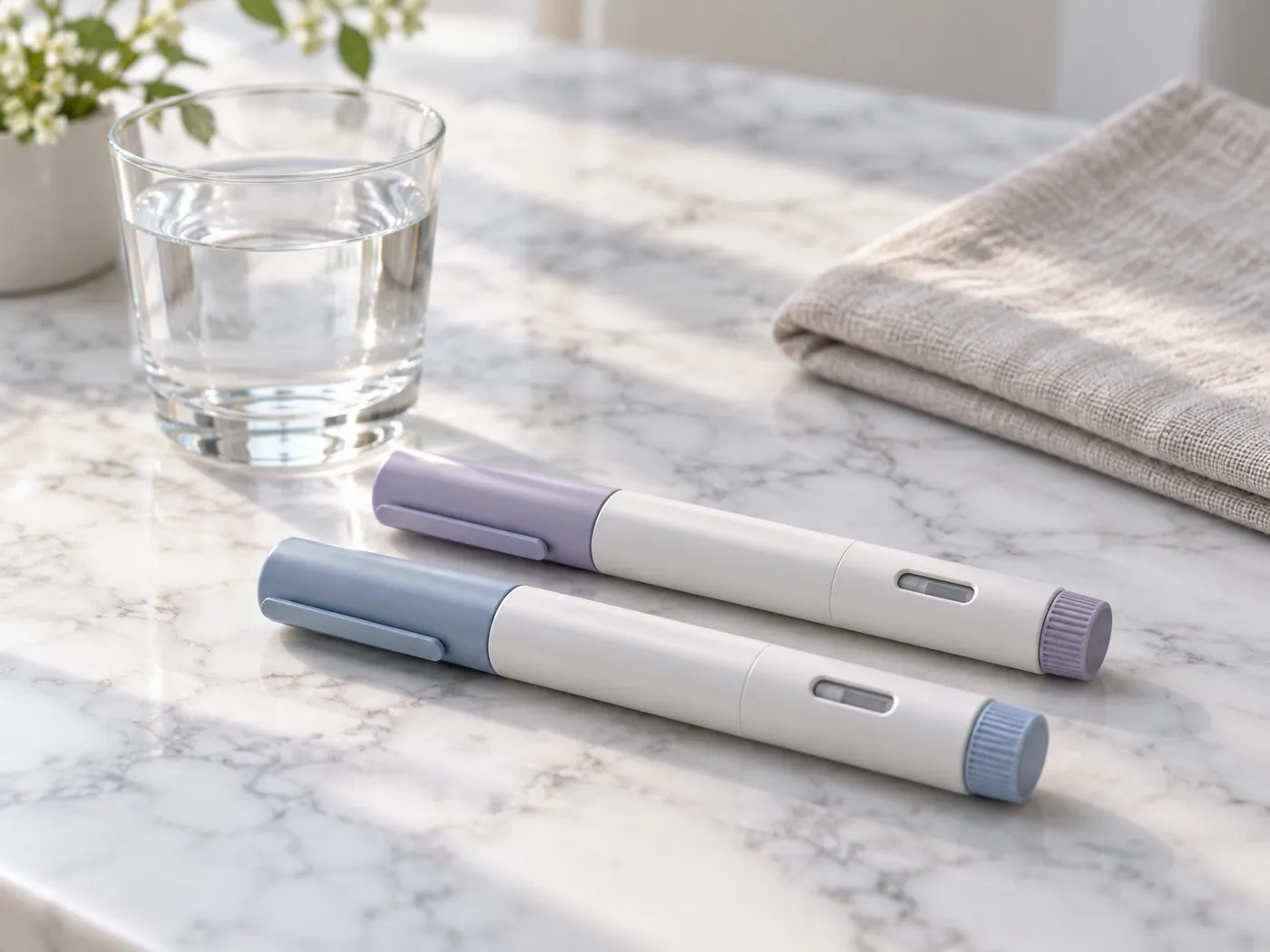
Semaglutide and tirzepatide are the two GLP-1 medications behind most of the dramatic weight loss results you have seen over the past few years. Both are weekly injections. Both work by regulating appetite and blood sugar. And both work best inside a provider-supervised program. But they are not interchangeable, and the right choice depends on your biology, your goals, and your history.
How they work
Semaglutide activates GLP-1 receptors, which slow digestion, steady blood sugar, and quiet the food noise that drives overeating. Tirzepatide does that too, then adds a second mechanism: GIP receptor activation, which appears to improve how your body processes energy and may amplify weight loss.
What the results look like
Both medications can produce meaningful weight loss. In our practice, many patients see a stronger response on tirzepatide, and real-world results vary person to person, which is exactly why dosing, monitoring, and adjustments matter more than the headline number.
Side effects and tolerability
Both medications share the same common side effects: nausea, constipation, and fatigue, especially during dose increases. Some patients tolerate one noticeably better than the other. A provider who sees you monthly can adjust dose, timing, and supporting habits so side effects stay manageable.
Cost and access
Tirzepatide typically costs more, and insurance coverage for either varies widely. At Physician's Plan, weight loss members save 10 percent on GLP-1 medications, and your provider will be straight with you about which option fits your budget as well as your biology.
The honest answer
There is no universally better medication. There is a better medication for you, and finding it takes a provider who looks at your labs, your history, and your goals before writing anything. That conversation is exactly what your first appointment is for.