

Call Book an Appointment
Hyaluronic Acid Lip Filler

Lip filler,
explained.

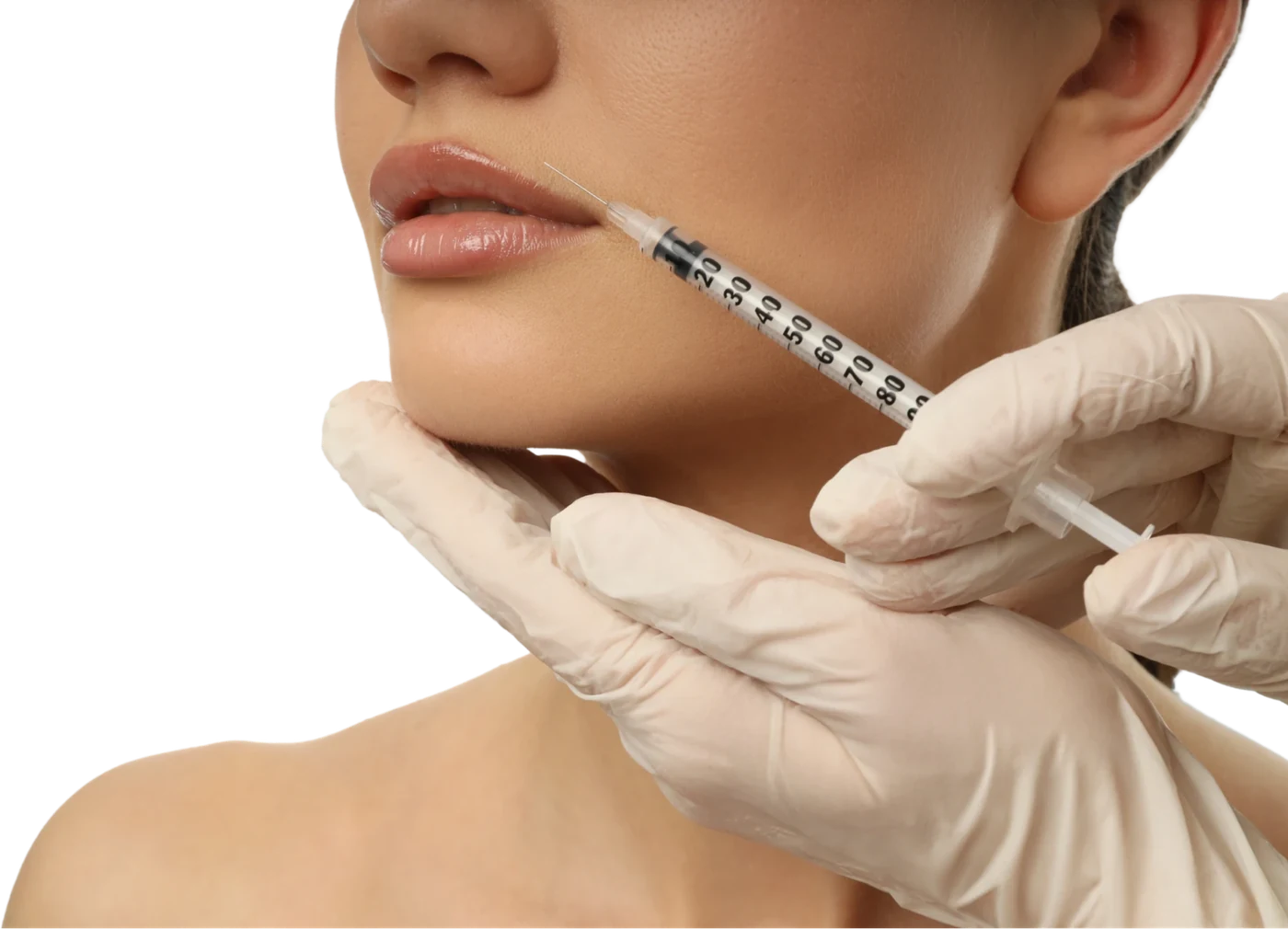
Good lip filler is the kind nobody can name. Lips that look rested and defined, that press and smile the way yours always have, just a little fuller. We shape first and add volume second, and we never place more in one visit than your lips can carry. Every treatment is placed by our injectors under the supervision of our Medical Director.

$650
Per syringe, Revanesse Versa+
6 to 12 months
Typical duration
Free
Consultation
7
Carolina clinics
In short

Hyaluronic acid lip filler at Physician's Plan, administered by our injectors under medical supervision. Pricing, what to expect, risks and FAQs, at seven Carolina clinics.

Who it is for

Volume · Shape and definition · Balance

Starting price
$650per syringe, Revanesse Versa+ · Lip flip is Botox®, not filler: $12.99 per unit plus fee
Common questions ↓Questions? Chat with us →

Seven locations across the Carolinas. Consultations with a licensed provider.

What It Is

What Lip Filler Is and How It Works

Hyaluronic acid is a sugar that occurs naturally in your body, where it helps skin hold moisture. Lip filler is a cross-linked form of it — a clear gel that occupies space and draws water when injected into and around the lip. It is gradually absorbed, so the effect is temporary.

The products

Lip filler is a hyaluronic acid filler approved for the lips. Physician's Plan carries Restylane L, which is FDA-approved for lip augmentation in adults over the age of 21. We carry other hyaluronic acid fillers as well, each with its own FDA-approved labeling and its own approved areas; which one suits your lips is your provider's clinical decision at your consultation. Ask which product is planned, and call your clinic to ask what is available.

Where the numbers below come from

Every clinical figure on this page comes from the FDA-approved labeling of a formulation indicated for the lips, and names which one — Juvéderm® Ultra XC, approved for injection into the lips and perioral area for lip augmentation in adults over 21, or Juvéderm Volbella XC, approved for lip augmentation and correction of perioral rhytids in adults over 21. Those names identify the studies behind the figures, not what Physician's Plan carries.

What FDA has not approved

FDA has not approved filler for body contouring, needle-free filler "pens," or over-the-counter filler. Ask your provider for the patient labeling of whatever they propose — the FDA recommends that.

What It Changes

What Lip Filler Can Actually Change

Volume

Overall fullness, what most people mean by "lip filler." Placed in the body of the lip, it adds softness and projection in small, reversible steps.

Shape and definition

The vermilion border, Cupid's bow, philtral columns — definition can come from very little volume.

Balance

Upper-to-lower proportion and side-to-side asymmetry; filler narrows the gap rather than erasing it.

Lines above the lip

A product-specific indication: not every lip filler is approved for perioral lines, so whether filler suits yours is your provider's decision.

Subtle or fuller is a volume decision, and there is no standard amount — in the Ultra XC lip study the volume used varied sixteen-fold. Starting conservatively and reviewing at about two weeks is one approach; your provider sets the plan.

Two things filler does not do. It does not change lip colour, so pigmentation and dullness are not filler concerns. And a lip flip — a neuromodulator at the upper lip — adds no volume; perioral injection sits outside the approved cosmetic indications for botulinum toxin products, so whether it suits you is your prescriber's decision. Physician's Plan prices it per unit used, at the Botox rate of $12.99 per unit, plus a $100 provider fee. Raise either at your consultation.

Shape and definition can come from very little volume.
The Physician’s Plan standard
Candidacy, Risks & Safety

Candidacy, Risks, and Safety

The lip indication is adults over the age of 21, so anyone under 22 falls outside it. Both labels cited here say safety has not been established in pregnancy, in breastfeeding females, or in younger patients — Ultra XC says under 18, Volbella XC under 22. Restylane L, the filler we carry for lips, carries its own patient-label warnings: it should not be used during pregnancy, while breastfeeding, or while trying to become pregnant, and its safety and effectiveness have not been established in patients over 65. Tell your provider if you are pregnant or breastfeeding; that assessment is theirs.

When lip filler is not appropriate

From the FDA-approved labeling of the two formulations this page cites — Juvéderm Ultra XC and Volbella XC:

  • Severe allergies marked by a history of anaphylaxis, or a history or presence of multiple severe allergies
  • A known allergy to lidocaine, or to the gram-positive bacterial proteins used to make the hyaluronic acid
Restylane L — the product we carry for lips

Restylane L contains lidocaine. Under its FDA-approved labeling, Restylane-L is contraindicated in patients with a history of hypersensitivity to amide-type local anesthetics. It is also contraindicated in patients with severe allergies manifested by a history of anaphylaxis or a history of multiple severe allergies, in patients with a known allergy to gram-positive bacterial proteins, which are present in the product, and in patients with bleeding disorders. Use at a site with active inflammation or infection should be deferred until the underlying process is controlled.

Hyaluronic acid fillers come in several formulations and do not all contain lidocaine — the FDA record lists Revanesse Versa separately from Revanesse Versa+ with lidocaine, and the Restylane family includes formulations with and without it; the Restylane L we carry is one of those that contains it. Ask which exact formulation is proposed, and read its patient labeling.

Where there is active inflammation or infection at the site — a cold sore, rash, hives, cysts, or pimples — treatment at that site is deferred until the underlying process is controlled, per the product labeling.

Tell your provider if you
  • Take aspirin, ibuprofen, or other medicines that affect bleeding — they may increase the risk of bruising or bleeding; do not stop a prescribed medicine without the prescriber's say-so
  • Are on therapy that reduces your immune response — it may increase infection risk; Restylane L is used with caution in patients receiving it
  • Are planning a laser or peel — a possible inflammatory reaction
  • Have a history of excessive scarring or pigmentation disorders — safety in both is unstudied
  • Have had filler or another injectable in the face — fillers can cause late-onset reactions

None necessarily rules you out; your provider assesses each and may defer or decline treatment.

The risk that matters most

The serious risk with any dermal filler is unintentional injection into a blood vessel, which can block blood flow. The chances are low, but complications can be serious and may be permanent: reported ones include tissue death (necrosis), vision abnormalities including blindness, stroke, and scarring. A professional-society presentation to the FDA's device panel names the lip among the highest-risk sites.

Get emergency medical help right away, and tell them you had a filler injection, if you have changes in your vision; signs of a stroke, including sudden difficulty speaking, numbness or weakness in the face, arms or legs, difficulty walking, face drooping, severe headache, dizziness or confusion; skin near the injection site that turns white or blanched, gray or blue; or unusual pain during or shortly after treatment. Tell your provider as well.

Call your provider immediately for significant pain away from the injection site, redness or visible swelling lasting more than a few days, or any side effect appearing weeks or months later.

Common side effects, in real numbers

Injection-site reactions are close to universal — plan your timing. In the Ultra XC lip study, among the 193 subjects who provided information about side effects after their initial treatment, swelling was reported by 96%, bruising 93%, firmness 90%, lumps or bumps 88%, tenderness 85%, redness 78%, and pain 74%, plus discoloration, itching and peeling. Most were mild or moderate and lasted 14 days or less, but some subjects had severe reactions, and some had lumps or swelling weeks to months later. Less common risks include nodules needing treatment, infection, and allergic reaction. Downtime varies from person to person: swelling and bruising usually last days, and can last longer.

Your Appointment

What to Expect

1

Your consultation

Dermal fillers are prescription devices: federal law restricts their sale to by or on the order of a licensed practitioner. That practitioner examines your lips and confirms filler is appropriate. Ask which product is planned, how much of it, and what it costs, before anything is injected. A deposit is required to book injectable appointments.

2

Numbing

Hyaluronic acid fillers come with and without lidocaine, a local anesthetic that numbs as the product goes in; a topical cream may be applied first. Ask which formulation is planned. Discomfort varies — say so if you want more.

3

The appointment

The FDA-approved patient labeling describes a typical appointment: the area is cleaned with antiseptic and may be marked, filler is placed in small amounts, the area may be gently massaged, and ice may be applied afterward. Each syringe is packaged for single-patient use. Injectable treatment is a medical procedure; who may evaluate, order, and administer it is set by state law — see the FAQ below.

4

The first two weeks

Swelling is the rule, not the exception. In the Volbella XC lip study, 92.9% of subjects reported swelling after initial treatment; among those who did, the maximum duration ran from 1–3 days to 30 days. Lips can look uneven, firm, or larger than the final result in that window: swelling commonly obscures the early result, and when yours can fairly be judged is your provider's call. Call your provider promptly if redness or visible swelling lasts more than a few days, or if you have any of the symptoms listed under risks and safety. Two weeks is the usual point to assess the result, not the threshold for calling.

Results & Longevity

Results Timeline and How Long Lip Filler Lasts

  1. Weeks 2 to 4

    The usual point to assess, and the Ultra XC study's touch-up window — two weeks to one month. Some subjects were still swollen at 15–30 days; your provider decides when the result can be judged.

  2. Months 3–12

    Filler is absorbed and fullness declines.

Physician's Plan publishes a practical range of 6 to 12 months; duration depends on the product, the area, and the patient. Labeled durations run from treatment or the last touch-up, not from the day swelling settles.

Individual results may vary.

After Your Appointment

Aftercare

Follow the aftercare instructions you are given at your appointment; they take precedence. The Juvéderm Ultra XC patient labeling advises:

First 24 hours

minimize strenuous exercise and extensive sun or heat, which can increase redness, swelling, or itching at the site

Swelling

an ice pack over the area helps. Some swelling and tenderness is expected, and most of it settles within two weeks

Makeup

ask when you may apply it. Your provider will tell you once the injection sites have closed, and will say the same for lip balm and lipstick

Other treatments

tell your provider before a laser, chemical peel or any other facial procedure, so it can be timed around your filler rather than over it

Anything on the emergency list in risks and safety needs immediate attention.

Transparent Pricing

How Much Does Lip Filler Cost?

Lip filler is priced per syringe, so your total follows how much product your plan needs. Each syringe is packaged for single-patient use.

Lip filler at Physician's Plan

$650

per syringe, Revanesse Versa+

Revanesse Versa+ is the lip filler our injectors reach for most, from $650 per syringe. Restylane-L, FDA-approved for lip augmentation in adults over the age of 21, is also on our lineup at $700 per syringe. The product and the number of syringes are set at your consultation; ask your provider to confirm your cost before treatment.

Ways to pay  →

Payment and financing options

Eligible patients may apply to pay over time; terms and APR are lender-set:

  • Cherry — monthly payment plans, subject to eligibility; no hard credit check
  • CareCredit — health and wellness credit card, subject to credit approval
  • HSA / FSA — only for expenses that qualify as medical care; purely cosmetic treatment generally does not — confirm with your plan administrator or tax adviser

More on our payment options page.

Common Questions

Frequently Asked Questions About Lip Filler

How much is lip filler?

Lip filler is priced per syringe rather than as a flat fee, so your total depends on how much product your treatment plan calls for. Physician's Plan carries Restylane L, which is FDA-approved for lip augmentation in adults over the age of 21, at $700 per syringe, and which product suits your lips is set at your consultation — your provider may recommend a different product from our filler lineup. Each syringe is packaged for single-patient use. If your plan includes a touch-up, its cost follows the product used — ask your provider to confirm it before treatment. Consultations are free, and payment plans through Cherry and CareCredit are available, subject to approval.

How long does lip filler last?

In the FDA clinical study for Juvéderm Ultra XC, results lasted up to one year in the majority of subjects: 79% of subjects had at least a one-point improvement in lip fullness 3 months after treatment, and 56% at 1 year. Those durations are measured from treatment, or from the last touch-up — not from the day swelling settles. Physician's Plan publishes a practical range of 6 to 12 months. How long a result lasts depends on the product used, the area treated, and the patient. Repeat injections are usually needed after that to maintain the result. Individual results may vary.

Does lip filler hurt?

Injections can cause some discomfort during and after the procedure, and how much varies from patient to patient. Hyaluronic acid fillers are supplied in formulations with and without lidocaine, a local anesthetic that reduces injection-site pain as the product goes in, and a topical numbing cream may be applied beforehand — ask which formulation is planned. In the Juvéderm Ultra XC lip study, among the 193 subjects who provided information about side effects after their initial treatment, 74% had pain at the injection site, usually mild to moderate and short-lived.

Can lip filler be dissolved?

Hyaluronic acid fillers can be broken down with hyaluronidase, an enzyme that dissolves hyaluronic acid, and a provider may choose to use it to treat a complication or an unwanted result. Using hyaluronidase to dissolve dermal filler is not an FDA-approved indication for hyaluronidase, and it carries its own risks, so it is a medical decision made by your provider rather than a routine undo button. Removal or reduction of filler may need injections, surgery, or other interventions. Fillers not made of hyaluronic acid can be difficult or impossible to remove — one reason the material matters.

How long does swelling last after lip filler?

Swelling is expected in the great majority of patients. In the Juvéderm Volbella XC lip study, 92.9% of subjects reported swelling after their initial treatment; among those who reported it, the swelling lasted 1–3 days for 46.9%, 4–7 days for 34.3%, 8–14 days for 13.3%, and 15–30 days for 5.6%. Lips can look uneven or larger than the final result during that window, so results are usually assessed at about two weeks. That is an assessment point, not a threshold for calling: call your provider promptly if redness or visible swelling lasts more than a few days, or if you have significant pain away from the injection site. Get emergency medical help right away, and tell them you had a filler injection, if you have unusual pain during or shortly after treatment; skin near the injection site that turns white or blanched, gray or blue; signs of a stroke; or any change in your vision. Individual results may vary.

How many syringes of lip filler do I need?

There is no standard amount — it varies by product, by area, and by patient. For Restylane L, the filler we carry for lips, the FDA-approved Restylane-L labeling sets the frame: no more than 1.5 mL per upper lip and 1.5 mL per lower lip per treatment session, because larger volumes were associated with more moderate and severe injection-site reactions; if more than 3 mL is needed in total, a follow-up session is recommended. Ask your provider how many syringes the proposed plan uses; each syringe is packaged for single-patient use, and a touch-up may be needed to achieve the desired result — 44% of the subjects in the Juvéderm Ultra XC lip study had one two weeks to one month after their initial treatment. In that study, touch-up and repeat injections generally used less product than the first treatment. Your provider sets the amount at your consultation.

Can lip filler look natural?

Volume, shape, and balance are separate decisions, and definition can be added with very little added volume. The amount placed is what drives how noticeable the result is, and starting conservatively with a review at about two weeks is one way to approach it; your provider sets the plan. Individual results may vary.

What is the difference between lip filler and a lip flip?

Lip filler is a hyaluronic acid gel that adds volume and shape and is FDA-approved for lip augmentation in adults over 21, and it is priced per syringe. A lip flip uses a neuromodulator to relax the muscle at the upper lip so it rolls outward, adding no volume; Physician's Plan prices it per unit used, at the same $12.99 per unit as Botox, plus a $100 provider fee. Perioral injection sits outside the approved cosmetic indications for botulinum toxin products, so whether a lip flip is appropriate for you is your prescriber's decision. Raise it at your consultation.

Who can get lip filler?

The FDA-approved lip indication is for adults over the age of 21, so anyone younger than 22 falls outside it. The labels also record what has not been studied, and the two lip formulations cited on this page differ: Juvéderm Ultra XC states that safety in pregnancy, in breastfeeding females, or in patients under 18 years has not been established, and Juvéderm Volbella XC states the same for patients under 22 years. Restylane L, the filler we carry for lips, carries its own patient-label warnings: it should not be used during pregnancy, while breastfeeding, or while trying to become pregnant, and its safety and effectiveness have not been established in patients over 65 — so tell your provider if you are pregnant or breastfeeding, and that assessment is theirs. Under those two labels you should not have lip filler if you have severe allergies marked by a history of anaphylaxis, if you have a history or presence of multiple severe allergies, or if you are allergic to lidocaine or to the gram-positive bacterial proteins used to make hyaluronic acid. The filler we carry for lips, Restylane L, contains lidocaine, and under its FDA-approved labeling Restylane-L is contraindicated in patients with a history of hypersensitivity to amide-type local anesthetics, in patients with severe allergies manifested by a history of anaphylaxis or a history of multiple severe allergies, in patients with a known allergy to gram-positive bacterial proteins, which are present in the product, and in patients with bleeding disorders. Other products have their own labeling and their own contraindications, and they do not all contain lidocaine — the FDA record lists Revanesse Versa separately from Revanesse Versa+ with lidocaine, and the Restylane family includes formulations with and without it. Ask which exact formulation is proposed, and ask to read its patient labeling. Where there is an active infection or inflammation at the site, such as a cold sore, treatment at that site is deferred until the underlying process is controlled.

Who administers lip filler at Physician's Plan?

Our expert injectors administer lip filler under the supervision of our Medical Director. FDA-approved dermal fillers are prescription devices: federal law restricts their sale to by or on the order of a licensed physician or properly licensed practitioner. Who may then evaluate, order, and administer is set by state law. In North Carolina, a physician, a physician assistant, or an appropriately authorized APRN may evaluate you, write the order, and administer within their own scope; where a registered nurse administers, it is under that practitioner's order, and a registered nurse does not prescribe. The FDA's own guidance is to treat filler injection as a medical procedure and to ask about your injector's training and experience.

Find Us

Seven locations
across the Carolinas.

Visit any of our South Carolina or North Carolina locations, each staffed with the same level of provider-supervised excellence.

Get in Touch

Ready to start your journey?

Fill out the form and one of our patient coordinators will reach out within one business day to schedule your first appointment.

Chat now, or send the form.
Response within 1 business day.
Mon–Fri, hours vary by center

Flexible ways to pay.

Cherry, CareCredit, and HSA/FSA all accepted. Care that fits your budget, not the other way around.

See Payment Options →